

Review of the PKR 60 floor-standing greeting card and postcard display
Why we wrote this review
We have been selling and distributing greeting cards, postcards and gifts since 2010, mainly to independent shops. When we started, suitable displays were difficult to find. Our customers wanted slim, compact floor stands, while the domestic market mostly offered very large stands or bespoke production beyond our budget.
So we designed our own solution, welded the first frame in our workshop and fitted it with wire pockets from a Czech manufacturer. We made our own stands for many years, refining and lightening the frame over several generations. We stopped only when the price of the wire-pocket components rose sharply.
Today we source stands from our supplier KIUB and the German manufacturer FLUHR DISPLAYS, whose full range we represent.
The history of FLUHR DISPLAYS
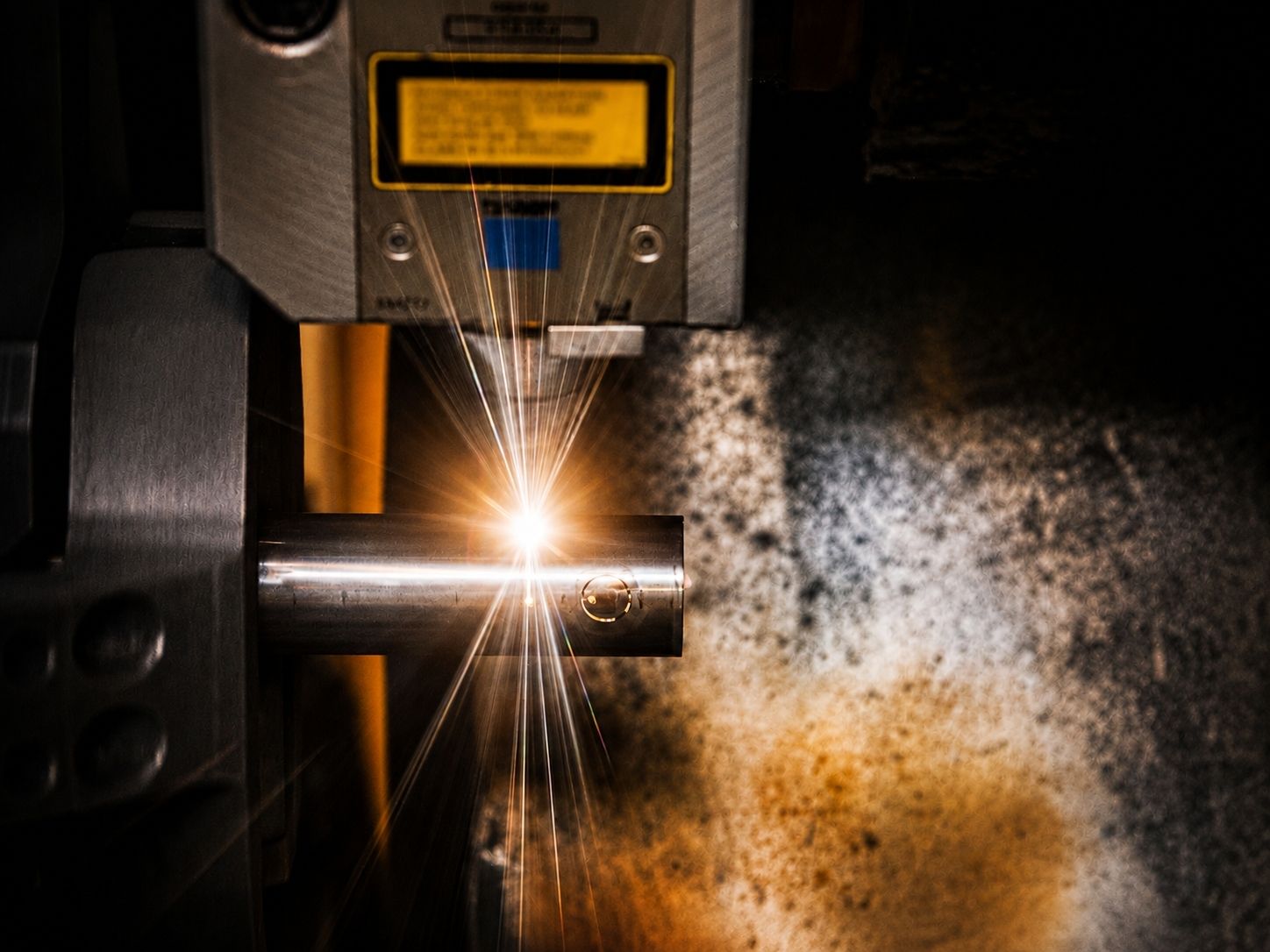
In 1947, amid the shortages of post-war Germany, Fridolin Fluhr began making wire products such as lampshades and mattress springs. The first sales display followed in 1957: a tiny countertop spinner for 12 postcards. Over the years, the company expanded its range and introduced technologies including robotic welding and laser cutting, alongside modern design and production planning. At the time of the original review, the company employed around forty people.


Choosing a display
At PAPERY.CZ we focus on displays suited to our range: greeting cards, postcards and products with Euro slots or hanging cords.
FLUHR DISPLAYS offers dedicated postcard and greeting card stands as well as leaflet and literature displays. These fixed models are welded assemblies: unless you reach for a hacksaw, their configuration stays as it is. Fortunately, there is a wide choice.
If you need a more individual solution, the modular display range lets you choose a combination of pockets to suit the size and mix of your products. You equip the base with precisely the pocket types you need.
The standard finishes are silver and dark bronze. Dark bronze is an elegant name for a deep brown, and we think it looks excellent. The first FLUHR stand we supplied went to the tourist information centre in Kašperské Hory. Its manager chose carefully: most of their postcards were landscape, with only about a fifth in portrait format, so a modular stand was the right answer.
The right combination of interchangeable pocket sections solved the problem neatly. We always enjoy appreciative messages, but this one deserved a frame. Greetings to Kašperské Hory – if you visit, you may spot the dark bronze display for yourself.
Custom powder-coat colours can be arranged from 30 units of a catalogue item. Completely bespoke designs are considered individually. Contact us about your requirements.
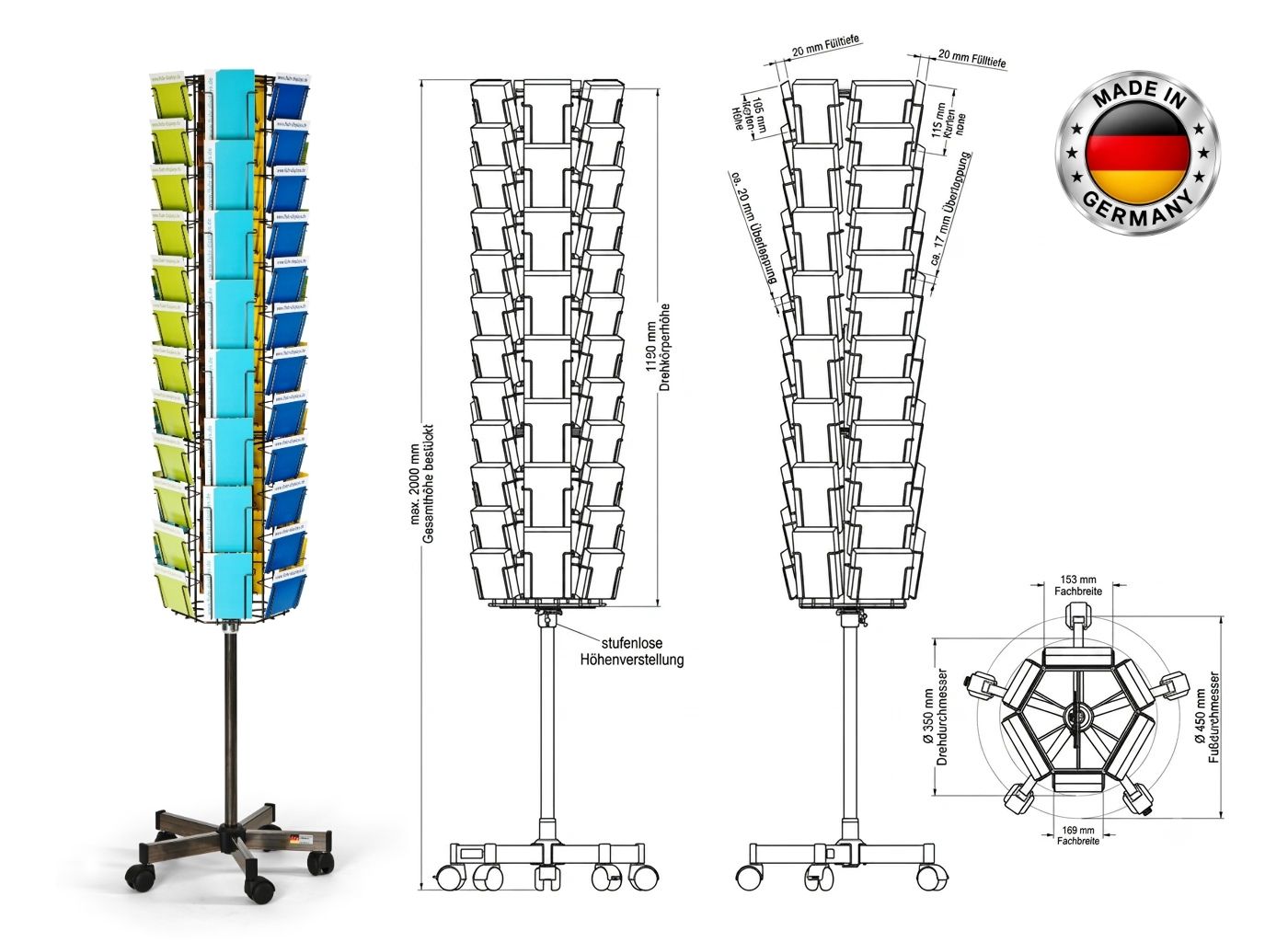
For this review we chose the PKR 60 greeting card and postcard stand, suitable for A6-format cards and postcards, including the gold OHH DEER range. This slim model has 60 pockets: 24 portrait and 36 landscape. The pocket assembly is fixed, so its layout cannot be changed. The finish is brown – or, more elegantly, dark bronze. Please check the product specifications for the exact pocket dimensions.
Shipping and delivery
The stand used for this review was available at FLUHR's factory warehouse. We placed the order on a Friday, visited grandma over the weekend, and the stand left the factory on Monday. It travelled with DHL and was delivered in the Czech Republic by DHL's partner PPL. This describes that particular delivery; current availability and delivery dates are shown on the product page.
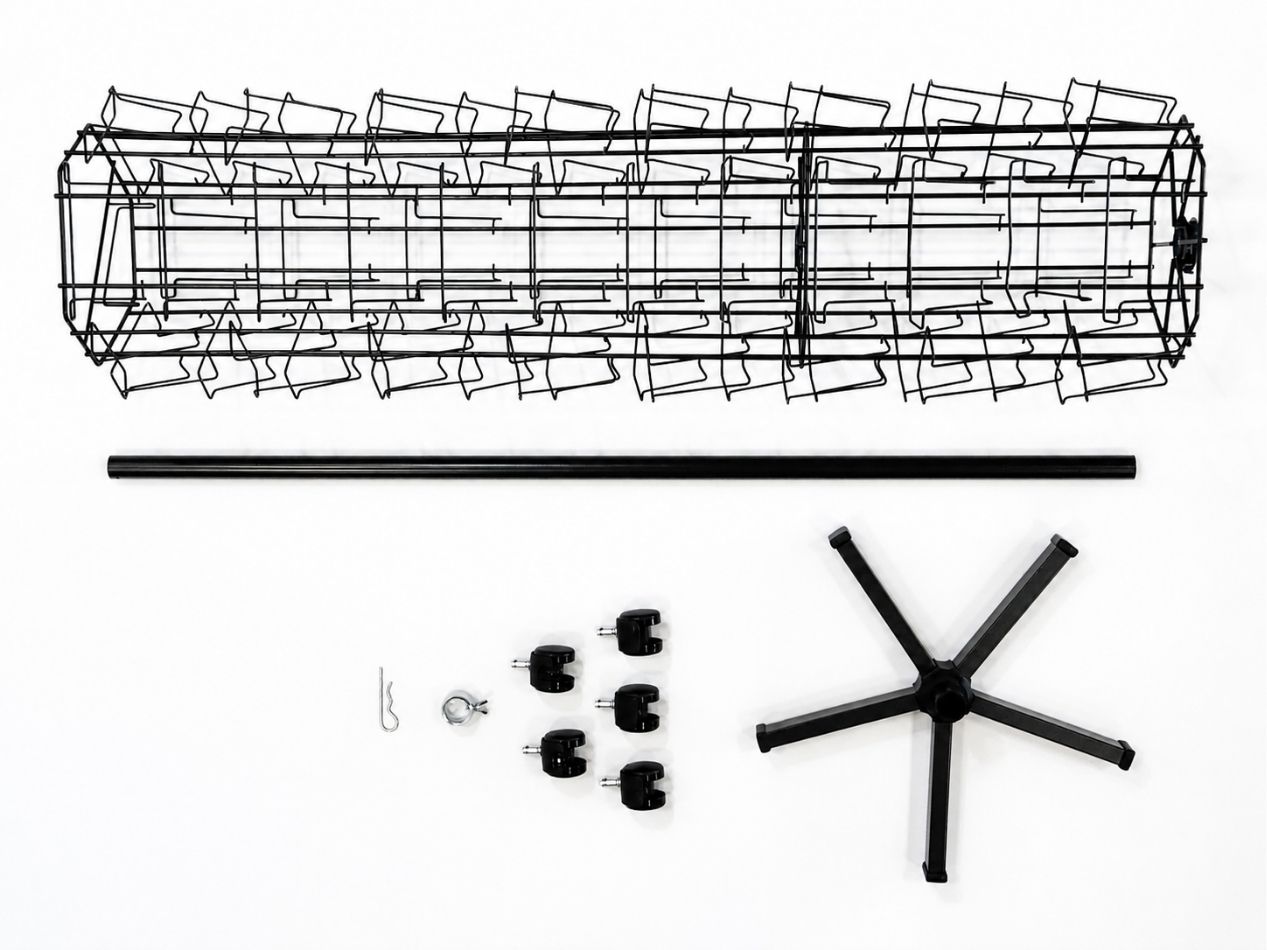
The stand is shipped disassembled, making the boxed package fairly compact.
Unpacking
The stand arrives in a five-ply cardboard box. Because the box is large and the contents are metal, it is secured with metal staples – rather like office staples, only bigger. They hold the packaging firmly without relying on adhesive tape. The metal can also be recycled into another useful object, perhaps even the spoon you are using to stir your coffee.
The support pole has its own paper wrapping, and the castors and small accessories come in paper bags rather than plastic. Besides looking better, heavier paper helps protect the parts from knocks in transit. Assembly instructions are included.
Construction and workmanship
We could not resist examining every detail. Having made a few hundred stands ourselves, we have some experience, but this is a different league. Our workshop efforts were amateur football; this felt like FC Bayern Munich turning up. Quite literally, the stand was made near Munich.
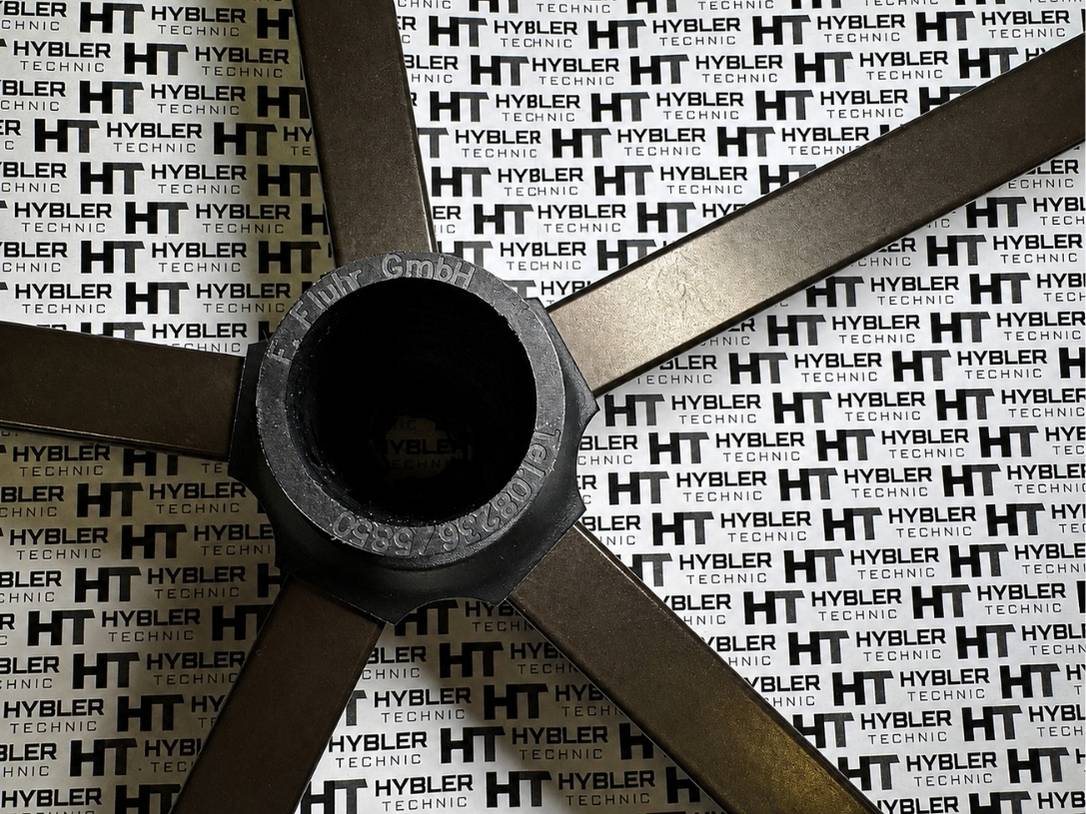
The five-leg castor base has such neat, precise welds that it is almost a shame they are covered by a plastic cap. On many other designs, the main pole fits directly into the base and is held by a screw, or is welded permanently in place as ours once were. That is sturdy, but awkward to store, transport and pack.
Here the pole fits through an additional plastic insert that works like a collet and locates it precisely. In practice, this is an excellent solution: the pole stays firm without wobbling, squeaking or rattling as the stand turns. It can still be dismantled without tools, and the metal finish is protected from direct contact at the joint.
The castors also fit by hand. Neither force nor a toolbox is needed: each castor pushes into the plastic end fitting of a leg. It is a simple, practical and elegant solution for manufacture and assembly. Other designs use threaded castors through drilled legs, sometimes with an exposed bolt and a decorative cap nut on top.
Some manufacturers, ourselves included, weld nuts underneath the legs and screw the castors into them. That looks tidier, but still involves drilling and threading. Transporting stands with castors already fitted is not ideal either: the plastic wheels are vulnerable to rough handling and can break.
Threaded designs also require a spanner, whether used by a factory worker or by the customer during assembly.
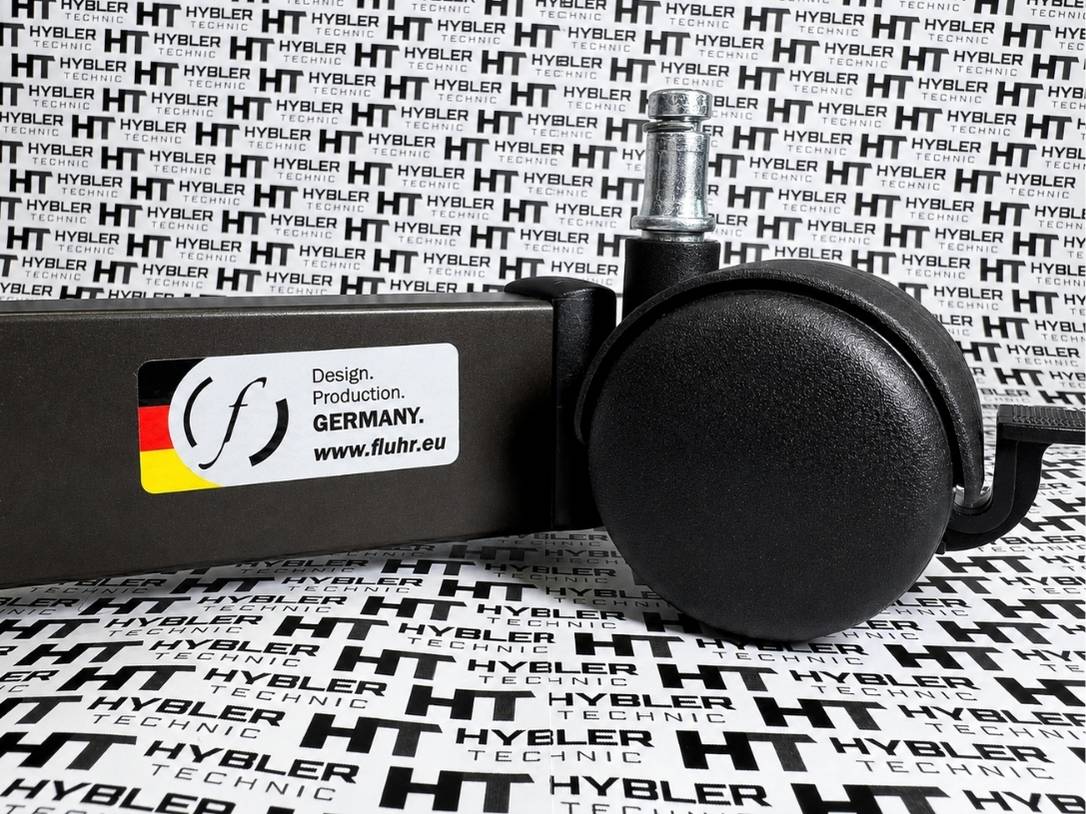
From our experience, a base without exposed screws or holes on its upper surface is easier for shop staff to dust. It also reduces places where water can collect if the stand is used outside.
The plastic leg ends are substantial, extend well into the metal profile and are secured by the castors themselves. They feel much more secure than ordinary hollow-section end caps, which can come loose when a display is moved or kicked accidentally. Two of the five castors have brakes; that is enough for this configuration.
When a stand is wheeled outside every day, finding and releasing the brakes quickly becomes a familiar routine.
We also have displays with metal-framed, rubber-covered wheels. They may look better, but in practice people sometimes drag a stand without releasing its brakes. The wheels soon wear unevenly. Add the risk of transit damage, and the availability of replacement castors becomes a real advantage.
This design uses the familiar stem-type castor found on office chairs, available from many hardware and DIY shops. The original review mentioned a 50 kg rating for such a castor; this should not be treated as the load rating of the complete display. Always follow the specifications for the actual stand and replacement part.
At the time of our check, HORNBACH offered a good choice of furniture castors with smooth stems. We like practical, readily replaceable components.
The rotating pocket assembly is equally well finished. The wires are cleanly cut without sharp edges; the structure feels substantial while remaining reasonably light. Even the thinner pocket wires are firm. We often straighten pockets bent by shop shutters or knocks during a move, but these put up noticeably more resistance.
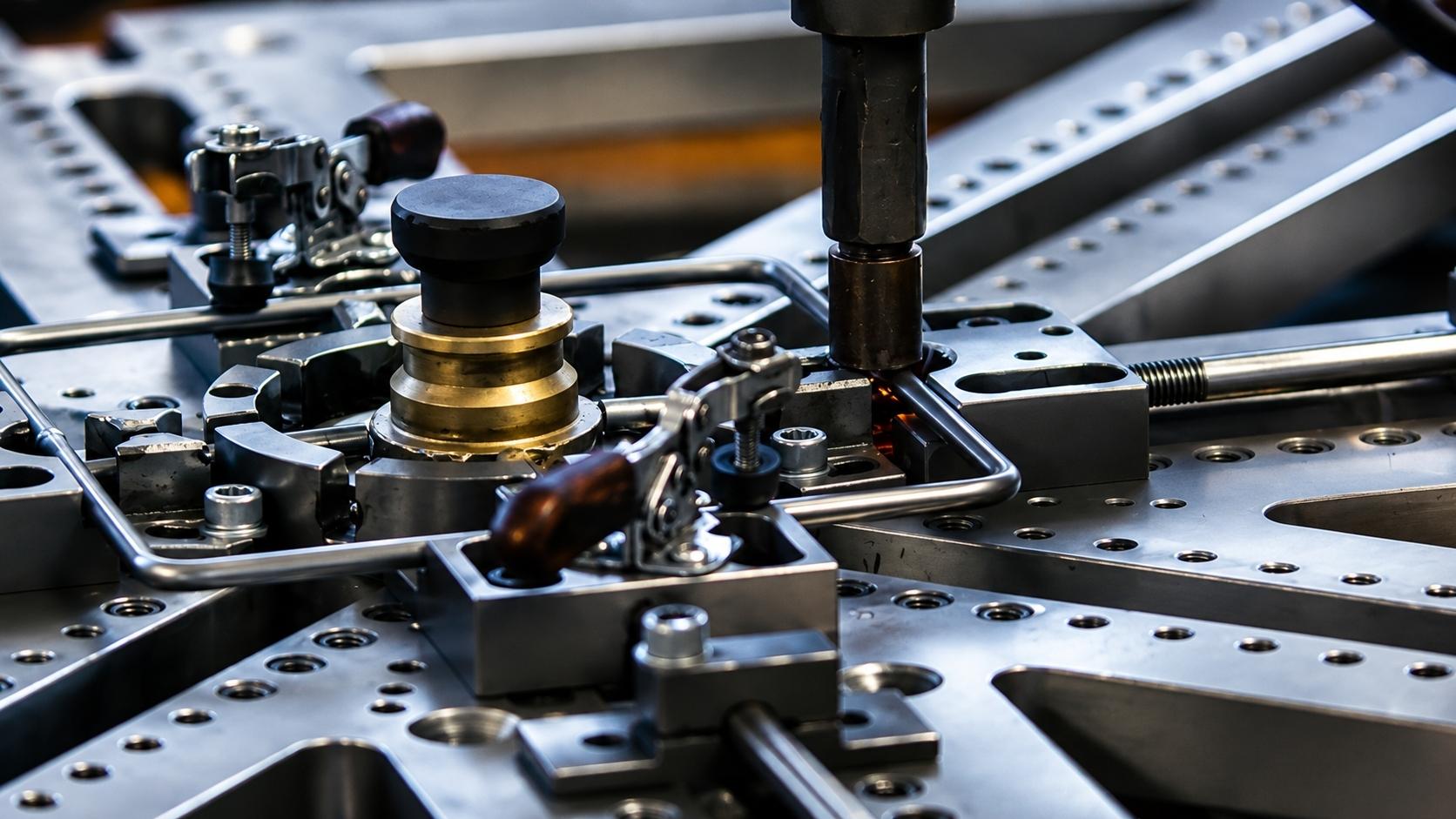
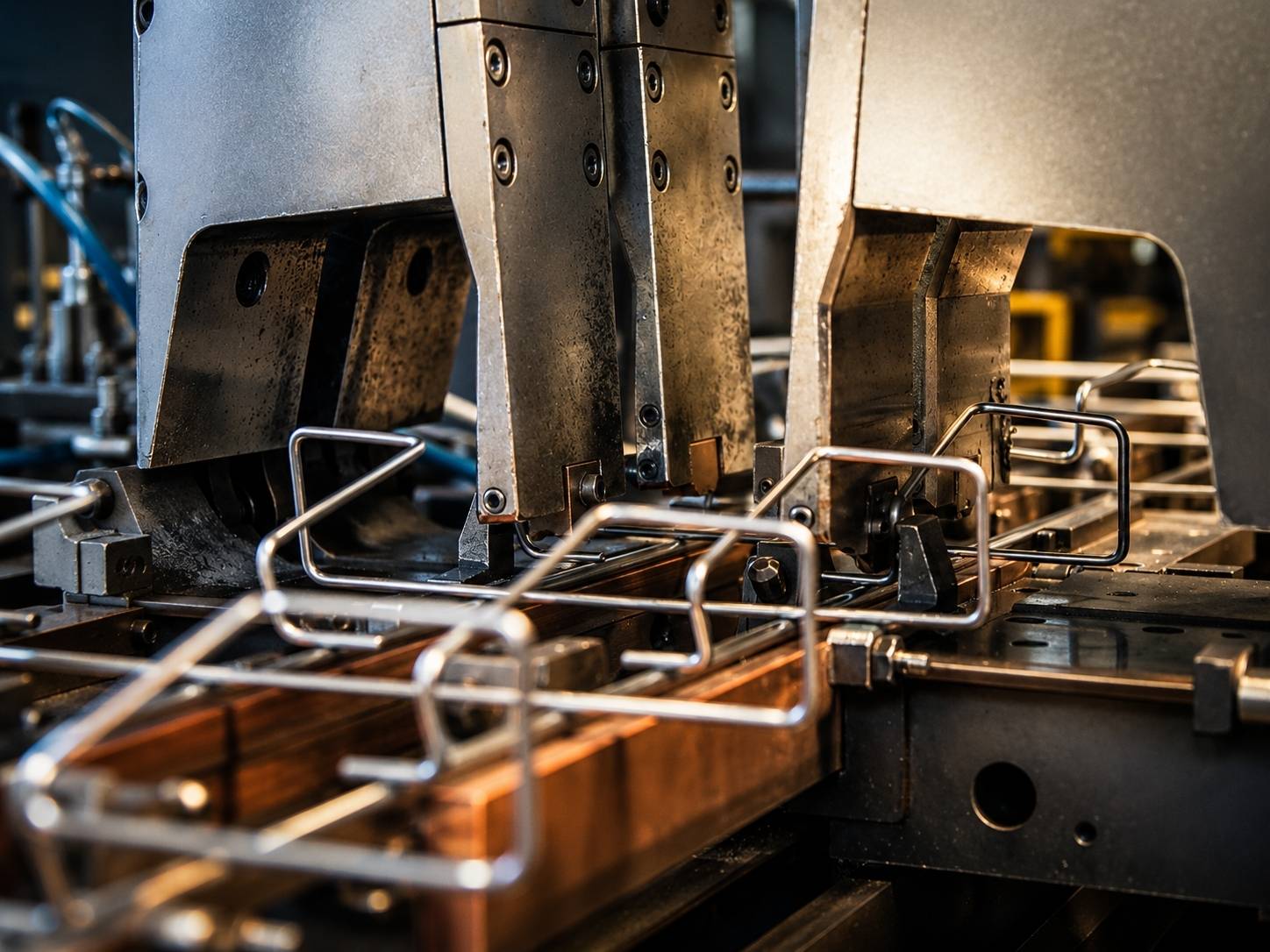
The welds are tidy and show the use of resistance welding. In simple terms, the two wires are positioned where they need to meet, then electrical current and pressure create heat at the contact point and join the metal.
The result is a strong, clean joint without adding filler metal from an electrode. There are no conspicuous weld beads or stray metal droplets. For this type of wire assembly, the finish and production efficiency are impressive.
A discreet holder at the top takes a price card or advertising sign. It does not look unfinished if left empty. In a hurry, even a piece of cardboard can serve as a temporary sign – a practical little detail for a busy shop.
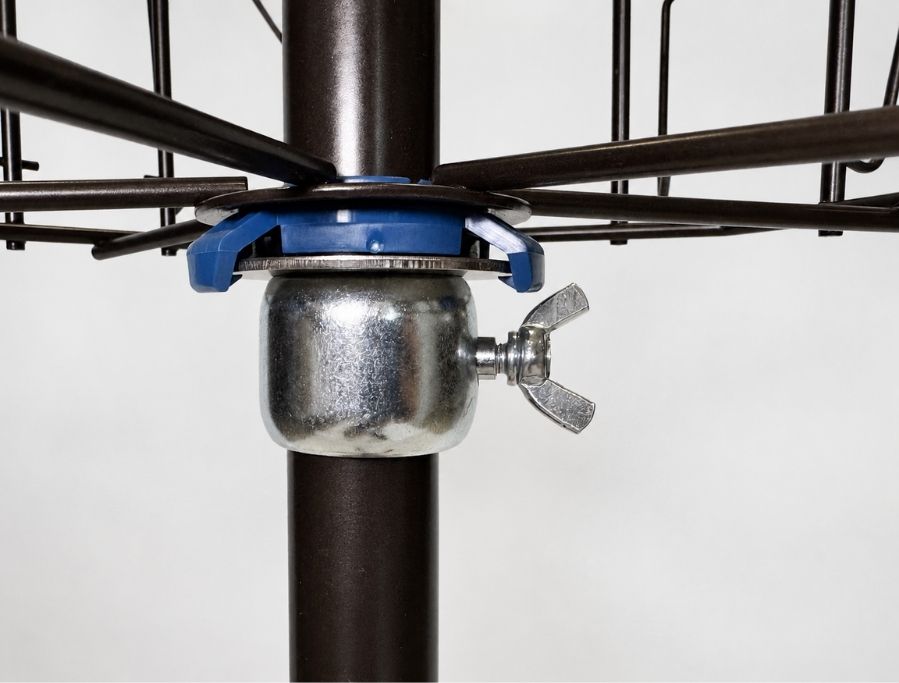
A collar with an adjusting screw sets the height of the rotating assembly on the main pole. Many manufacturers use a short piece of larger tube with a threaded hole and a screw, or a flattened threaded rod that can be turned by hand. In our own small-scale production, we used a hole through the pole and a large split pin, which fixed the height permanently.
FLUHR takes a different approach. The larger-diameter collar is pressed into a barrel shape, expanding it from the inside. At first, we wondered why they added another manufacturing operation. They also use a specially designed screw-and-nut arrangement rather than an ordinary loose screw.
The screw is captive: its end is slightly widened so it cannot be completely unscrewed and lost.
A conventional smooth collar relies mainly on friction opposite the screw. FLUHR's barrel-shaped collar grips at two edges instead – it feels more like a determined crocodile than a simple ring.
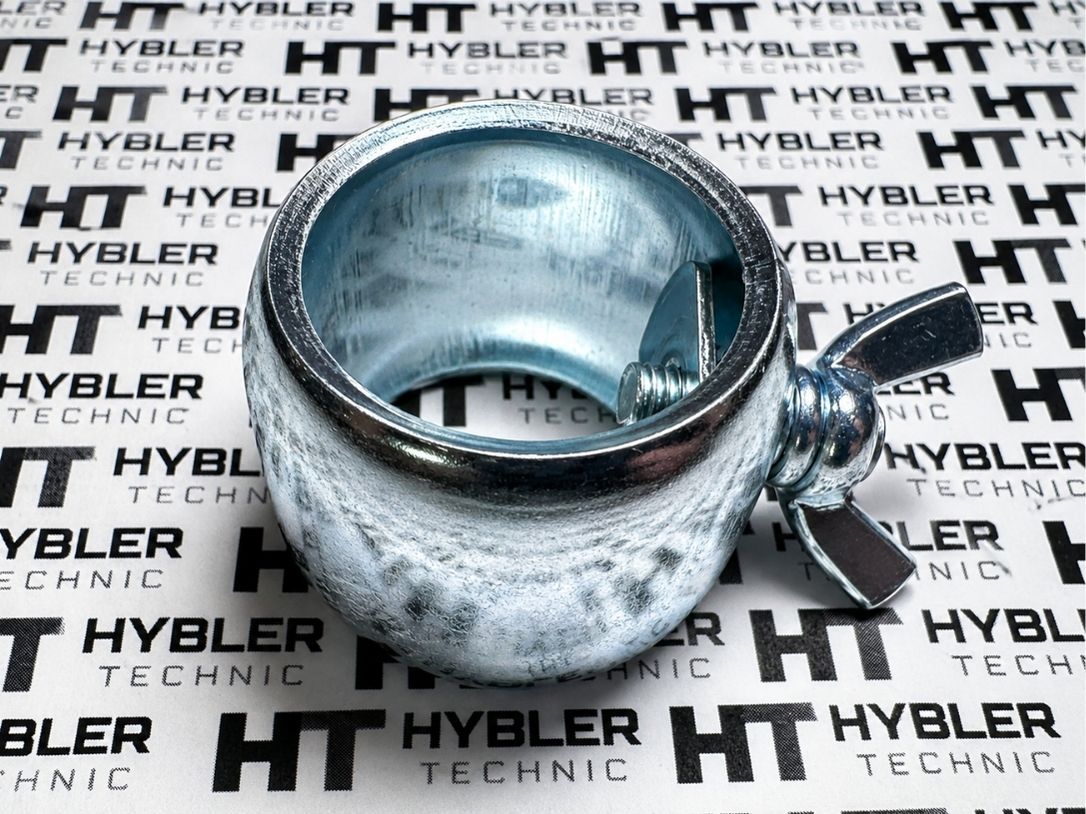
Pressing the collar into a barrel shape directs its upper and lower edges inward. Opposite the screw, both edges make contact with the support pole, giving two gripping points.
The arrangement feels reassuringly firm. As with any display, load it only within the manufacturer's stated limits.
Smooth rotation is provided by the main bearing below the wire assembly and a second guiding bearing higher up. Other stands use various bearing arrangements, from proper bearings to simple metal rings and balls. When a bearing is missing or damaged, customers have to push much harder to turn the display.
There is something satisfying about watching a customer browse a stand that turns smoothly. Picture a lady in a polka-dot dress, handbag on her arm, gently spinning the display, choosing two BUG ART cards and continuing through the shop at a leisurely Thursday-morning pace. The display should make that experience effortless.
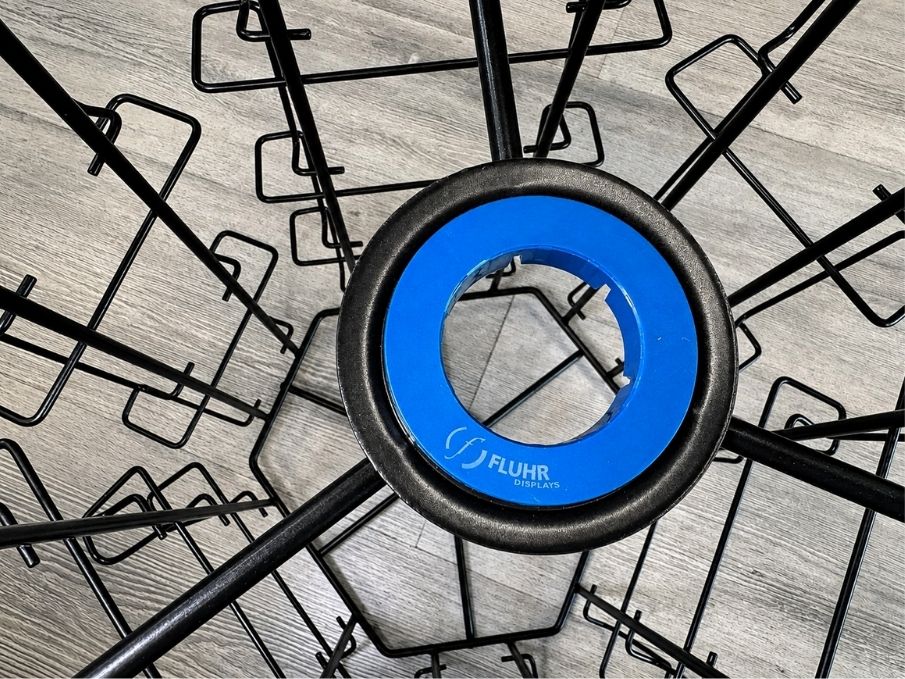
The FLUHR stand has two bearings. The main lower ball bearing sits in a blue plastic housing and is already in place for assembly: simply fit the rotating section onto the pole. If the bearing is accidentally dislodged, its three parts are straightforward to put back together.
Those parts are two metal rings of different diameters and a plastic cage containing the balls. Their different sizes make the arrangement easy to understand. The plastic cage helps reduce friction and noise. The upper blue ring acts as a plain bearing; both blue components keep metal surfaces from rubbing directly against one another.
Some ordinary stands rattle like a medieval battle when turned. This one is much quieter: the shop music can keep playing while customers browse and you wait by the till.

A practical maintenance note from our experience: do not add oil or grease to a new, freely running display bearing. Lubricant can attract dust and dirt, and unsuitable grease can dry out or harden. That can lead to black residue or sticky grime, especially near a draughty doorway or outdoors. Follow the manufacturer's care instructions for the specific bearing.
If a stand has been caught in the rain and its bearing has corroded, replacement is usually the better long-term solution. In reality, many displays work for years with very little care. From time to time we collect worn, bent, rusty veterans missing several wheels – silent witnesses to countless school trips and tourist visits.
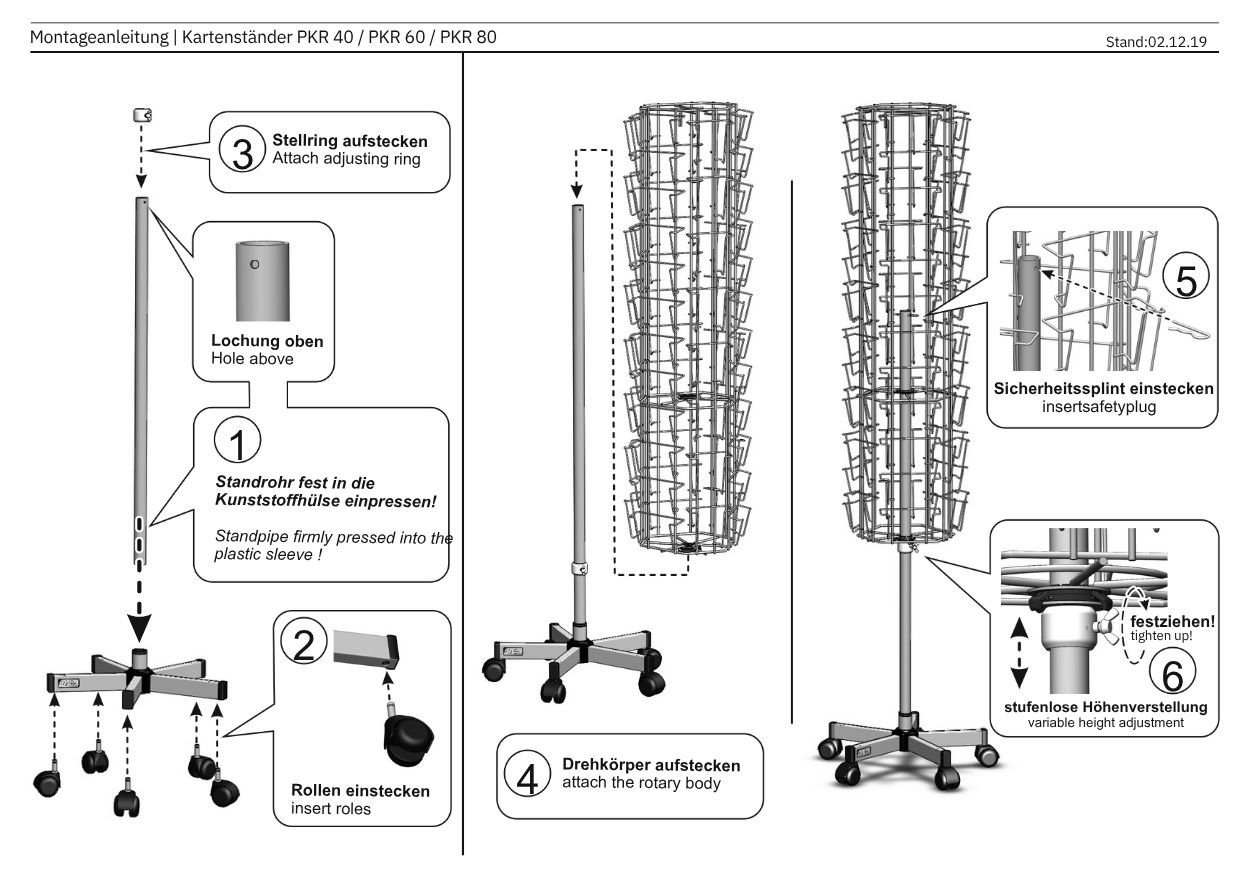
The included assembly guide is straightforward. For this model, the order is: castors, support pole, height adjustment, pocket assembly and finally the retaining pin.
Our conclusion: this is among the best display workmanship we have handled.
We supply the FLUHR range both from our Prague warehouse and directly from the factory in Germany. Availability depends on the individual model.
On www.papery.cz you can see availability for our Prague-Vysočany shop and warehouse. The complete FLUHR range is also presented on our specialist website www.hybler-technic.cz, alongside our other technical products and manufacturing work.
We also work on bespoke FLUHR projects tailored to individual customers' requirements. Get in touch to discuss your display.
